We use cookies to ensure that we give you the best experience on our website.
Maharajas' Express
Recommended Holidays
Secure your spot on the world’s leading luxury train tour in India today!
India Tour Package
The Indian Spledour – Maharajas’ Express
7-Day Tour
Arrive Delhi
Quick Info.
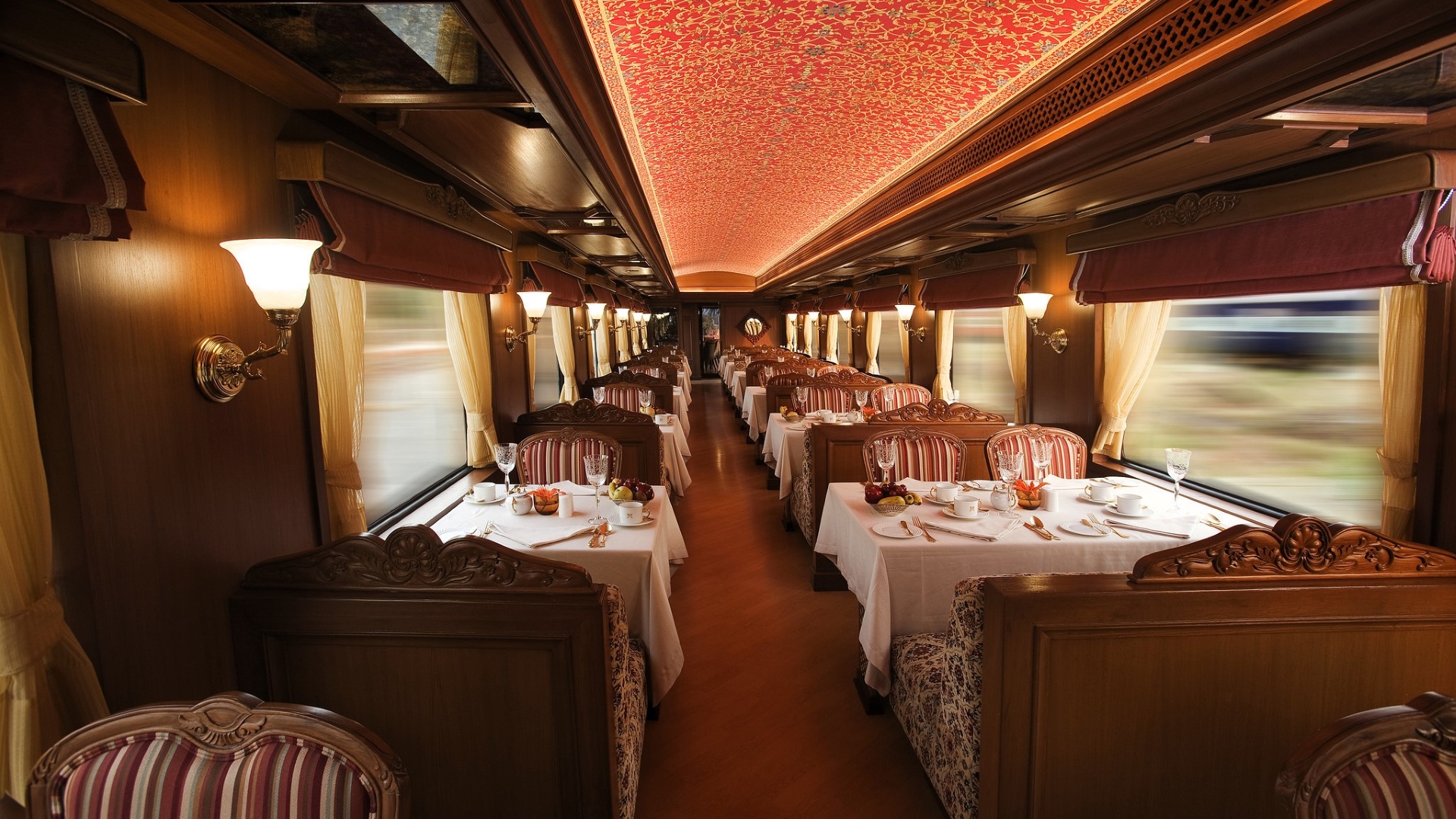
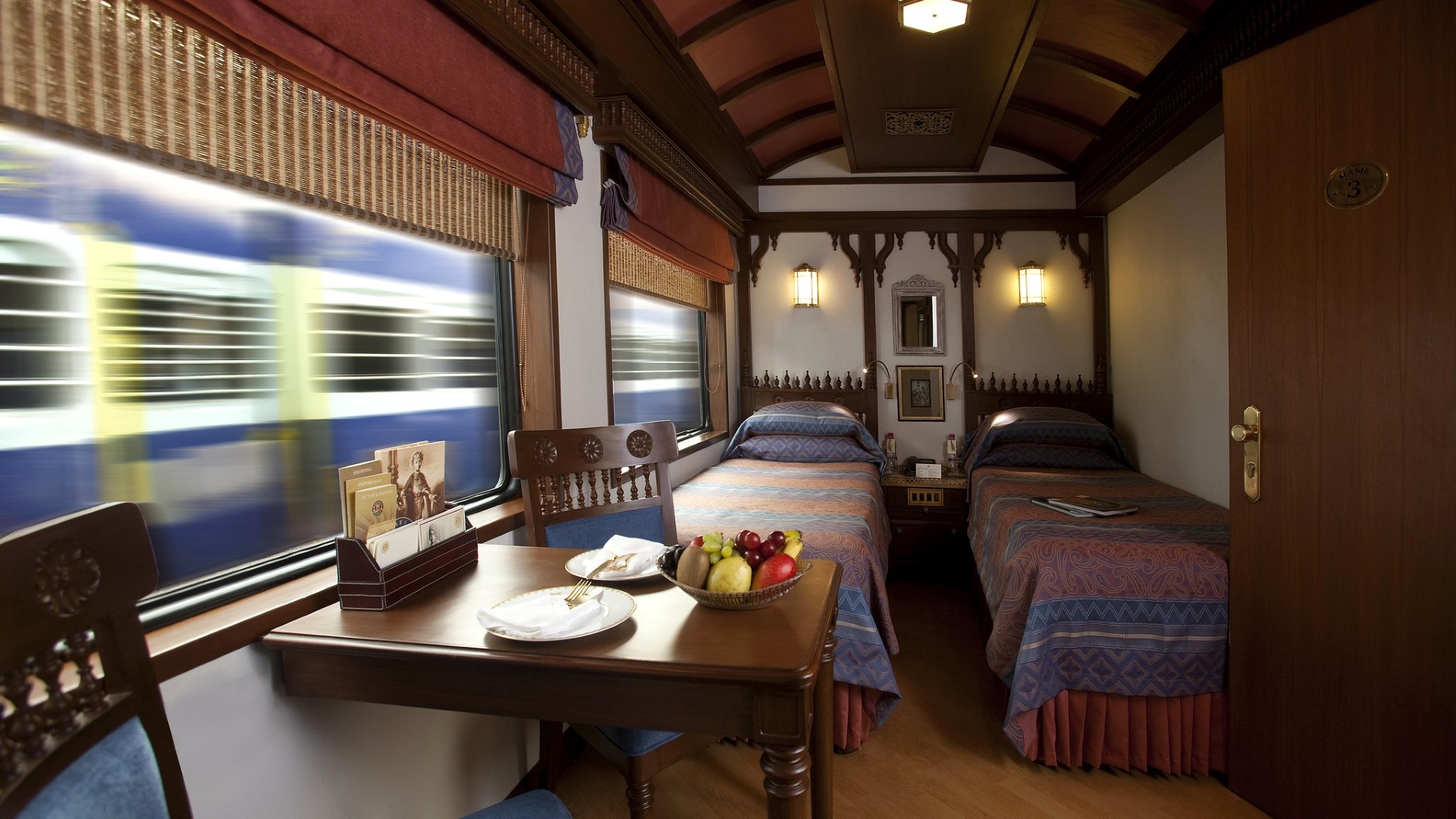
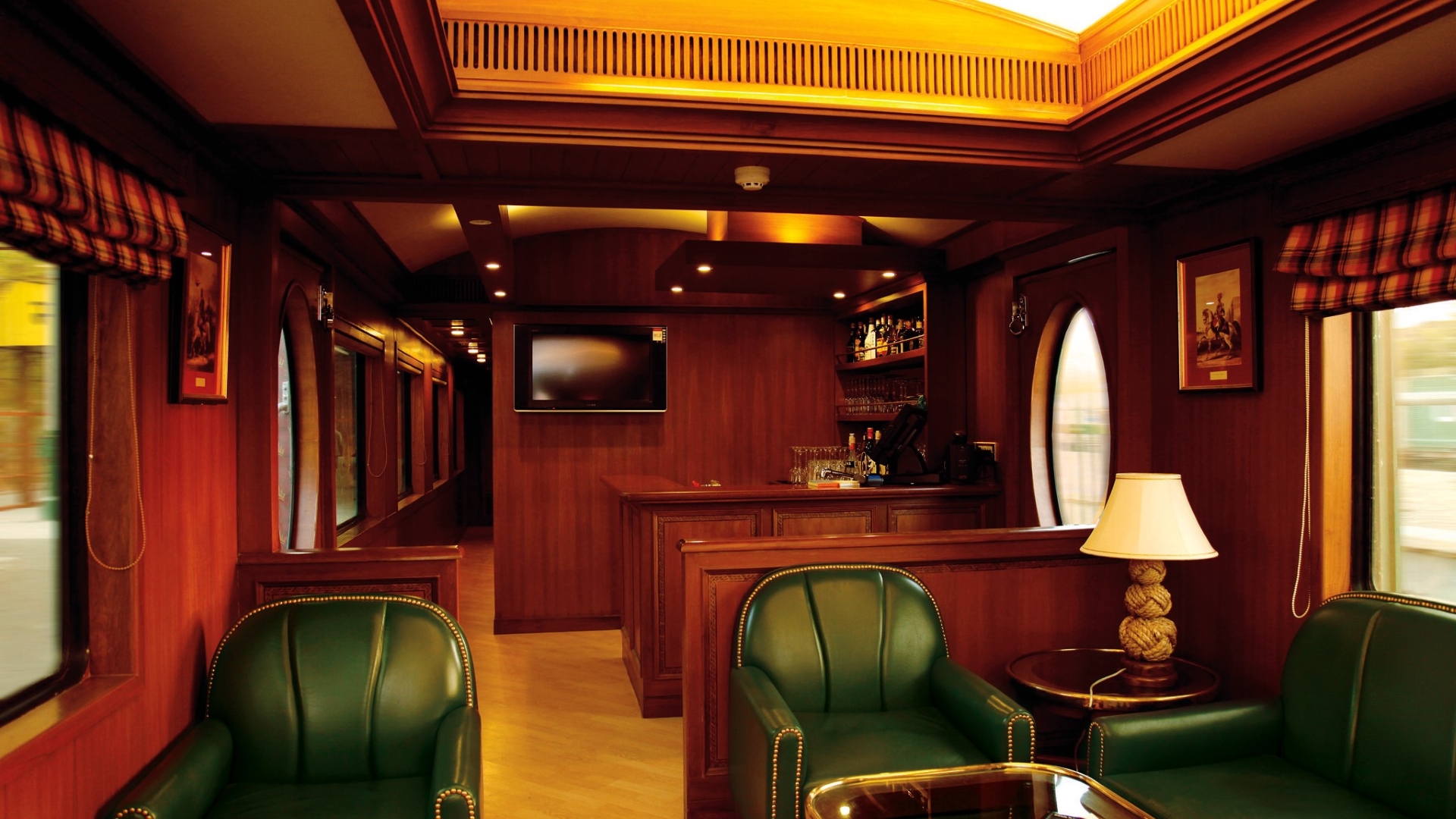
Experience the grandeur of India on the Maharajas’ Express – The Indian Splendour tour. Discover the iconic cities of Delhi, Agra, and Jaipur, as well as the wildlife of Ranthambore and the beautiful palaces of Udaipur and Jodhpur. With 6 nights and 7 days of luxury travel, immerse yourself in the rich culture and history of India on this unforgettable journey.
Discover the luxurious and rich culture of India with the Treasures of India tour on the Maharajas’ Express. Explore Delhi, Agra, Ranthambore, and Jaipur in just 3 nights and 4 days. Immerse yourself in the beauty and history of these iconic destinations with unparalleled comfort and style. Book your journey now and experience the treasures of India like never before.
Get a Free Quote. Share your travel dreams, and we'll craft a personalised itinerary for you!
The quote provided is an estimate based on the information you supply. Final pricing may vary based on availability, changes in travel dates, and additional details.
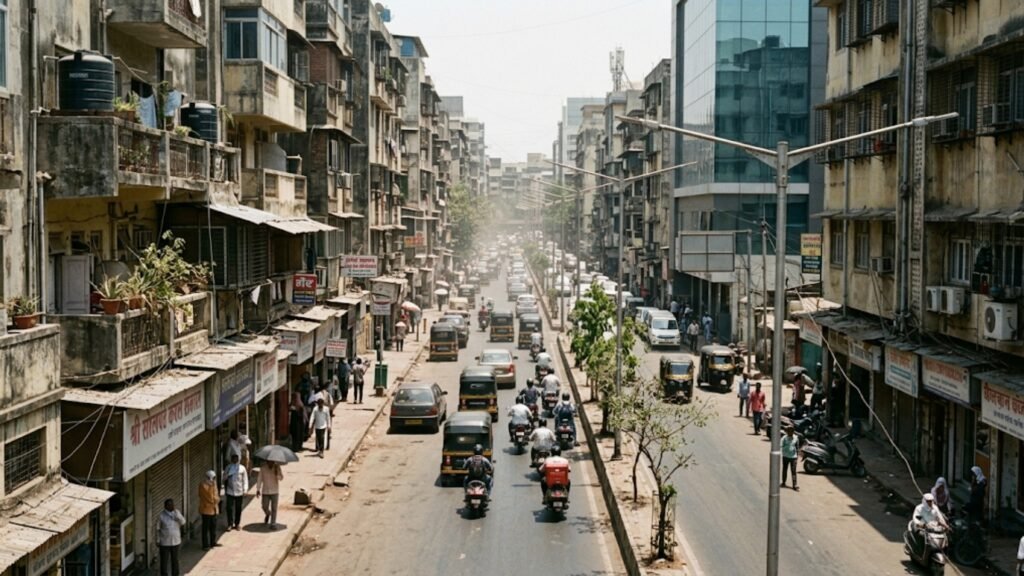
Modern cities are getting hotter every year. Glass towers trap heat, concrete roads absorb sunlight, and crowded urban areas often feel uncomfortable during summer. In contrast, many ancient temples across India, Nepal, Sri Lanka, and Southeast Asia remain naturally cool even during the hottest afternoons.
This difference is not accidental.
Ancient builders understood climate, airflow, sunlight, materials, and water management long before air conditioning existed. Their architectural methods created comfortable spaces that worked with nature instead of against it.
Today, architects and climate researchers are once again studying these traditional techniques to understand how ancient design principles can help modern cities reduce heat and energy consumption.
For travelers exploring South Asia, ancient temples are more than spiritual landmarks. They are living examples of sustainable architecture that still works centuries later.
Why Ancient Temples Stayed Cooler Than Modern Buildings
Ancient temple builders designed structures according to local climate conditions. Every part of the temple had a purpose related to comfort, airflow, and temperature control.
Modern buildings often focus on speed, density, and appearance. As a result, they rely heavily on air conditioning systems to remain comfortable.
Ancient temples followed a completely different philosophy. Builders carefully studied wind direction, seasonal sunlight, geography, and surrounding landscapes before construction began.
This climate responsive approach allowed temple interiors to remain naturally cool even in regions with extreme summer temperatures.
Visitors often notice this temperature difference immediately when entering old temples in Rajasthan, Tamil Nadu, Karnataka, Odisha, or Sri Lanka.
The Science Behind Ancient Temple Cooling Architecture
Ancient temple cooling architecture combined multiple passive cooling techniques together.
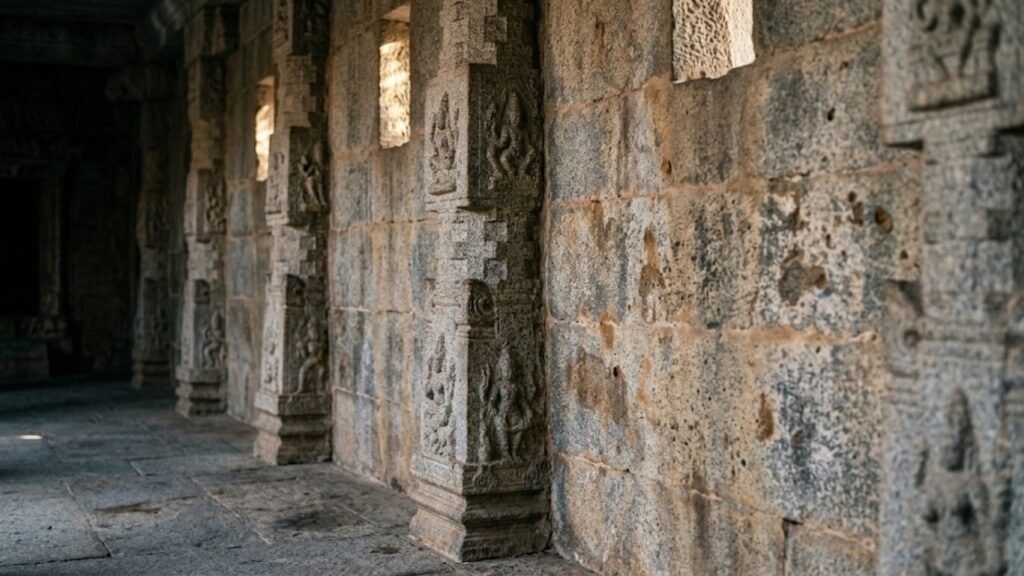
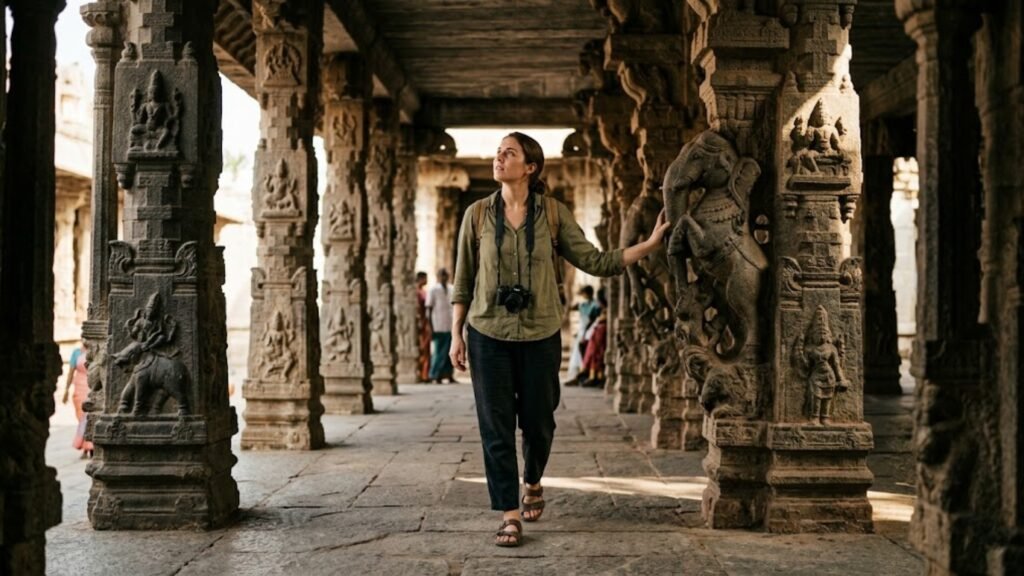
Thick Stone Walls Reduced Heat Transfer
Many temples were built using granite, sandstone, limestone, or laterite stone. These materials absorb heat slowly and release it gradually.
This process is known as thermal mass.
Because the walls heated slowly during the day, temple interiors stayed cooler even when outside temperatures rose dramatically.
In South India, many temples feature walls that are several feet thick. These heavy stone structures stabilized indoor temperatures naturally without mechanical cooling.
High Ceilings Improved Ventilation
Temple halls and mandapas often featured tall ceilings.
Warm air naturally rises upward. High ceilings created space where hot air could move away from visitors and worshippers below.
This simple but effective principle improved comfort throughout the structure.
Modern sustainable architecture still uses high ceiling concepts in climate responsive design.
Natural Airflow Created Continuous Cooling
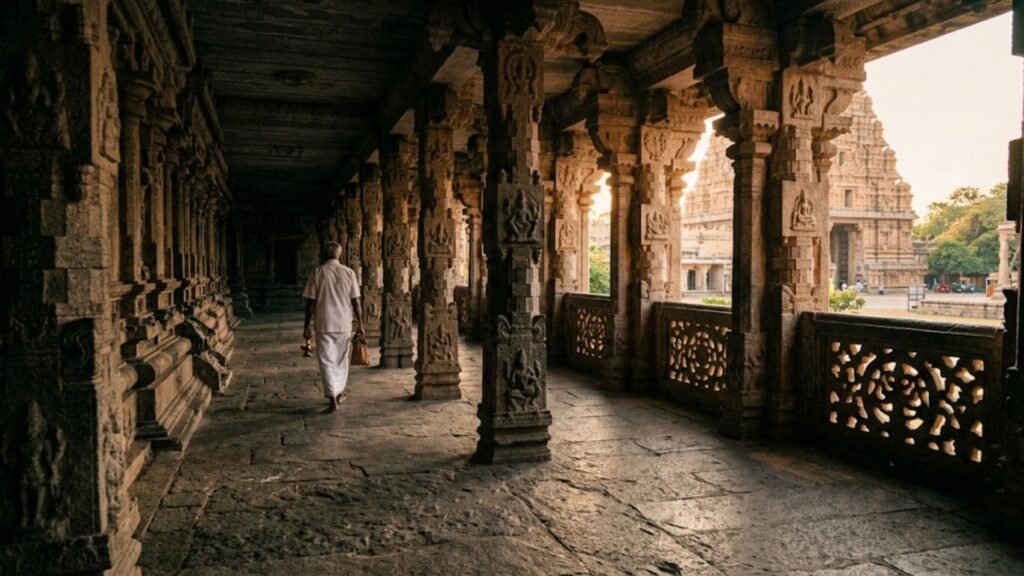
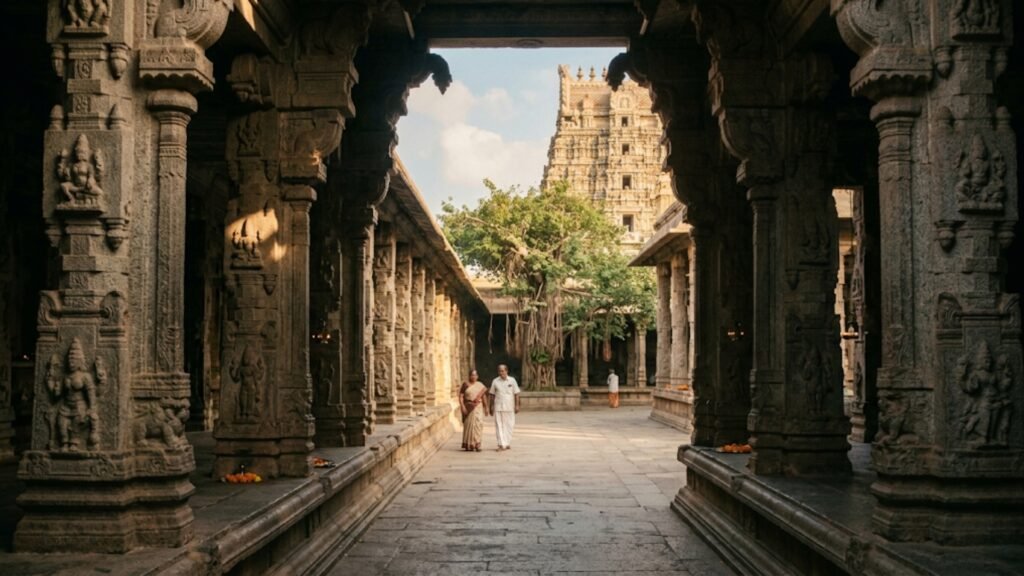
Ancient temples used aligned entrances, open corridors, stone screens, and carefully placed windows to improve airflow.
Cross ventilation allowed warm air to escape while cooler air entered the structure naturally.
Builders often aligned temple layouts with prevailing wind directions to maximize circulation.
This created steady cooling without electricity.
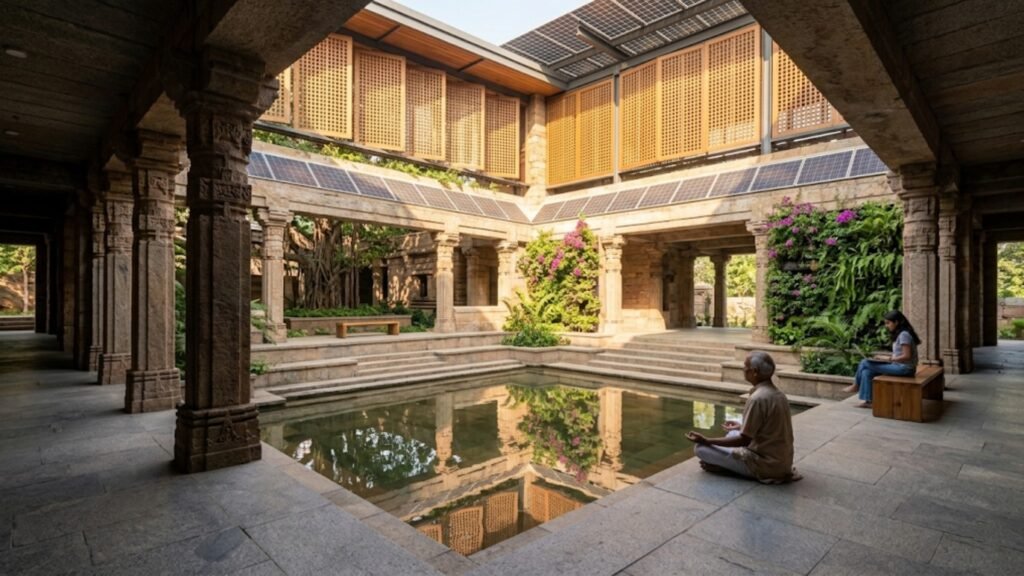
Courtyards Balanced Temperature
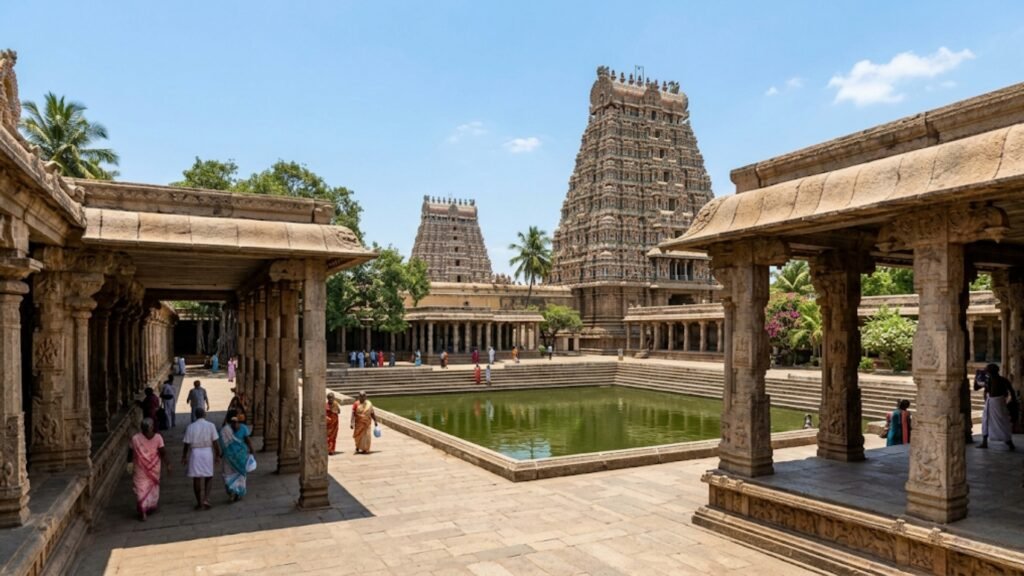
Open courtyards played a major role in temple cooling systems.
The central open space allowed sunlight into selected areas while surrounding corridors remained shaded.
At night, courtyards released stored heat into the atmosphere, helping the entire complex cool naturally before the next day.
Many famous temple complexes across India still use this courtyard based design.
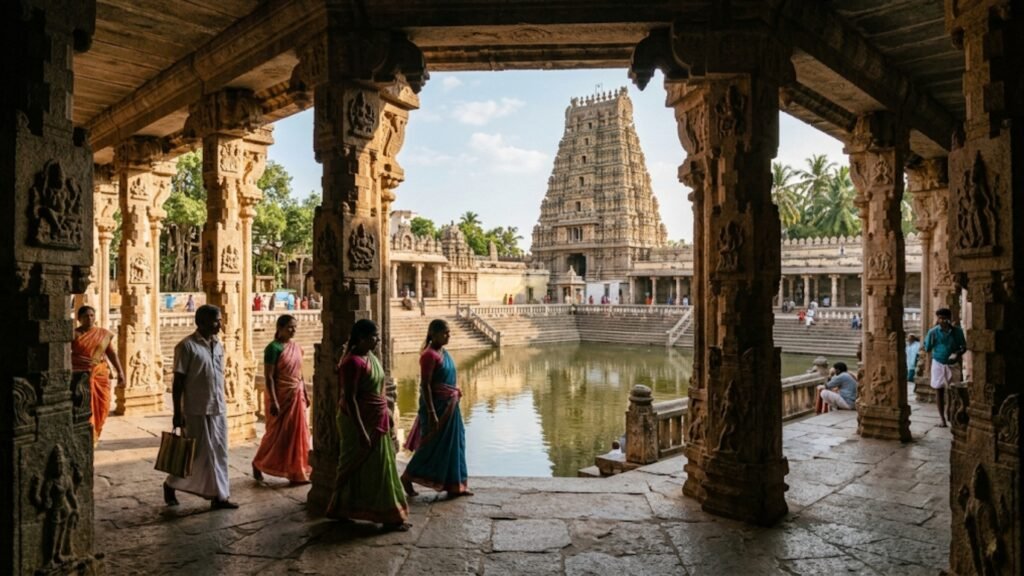
Water Bodies Lowered Surrounding Temperatures
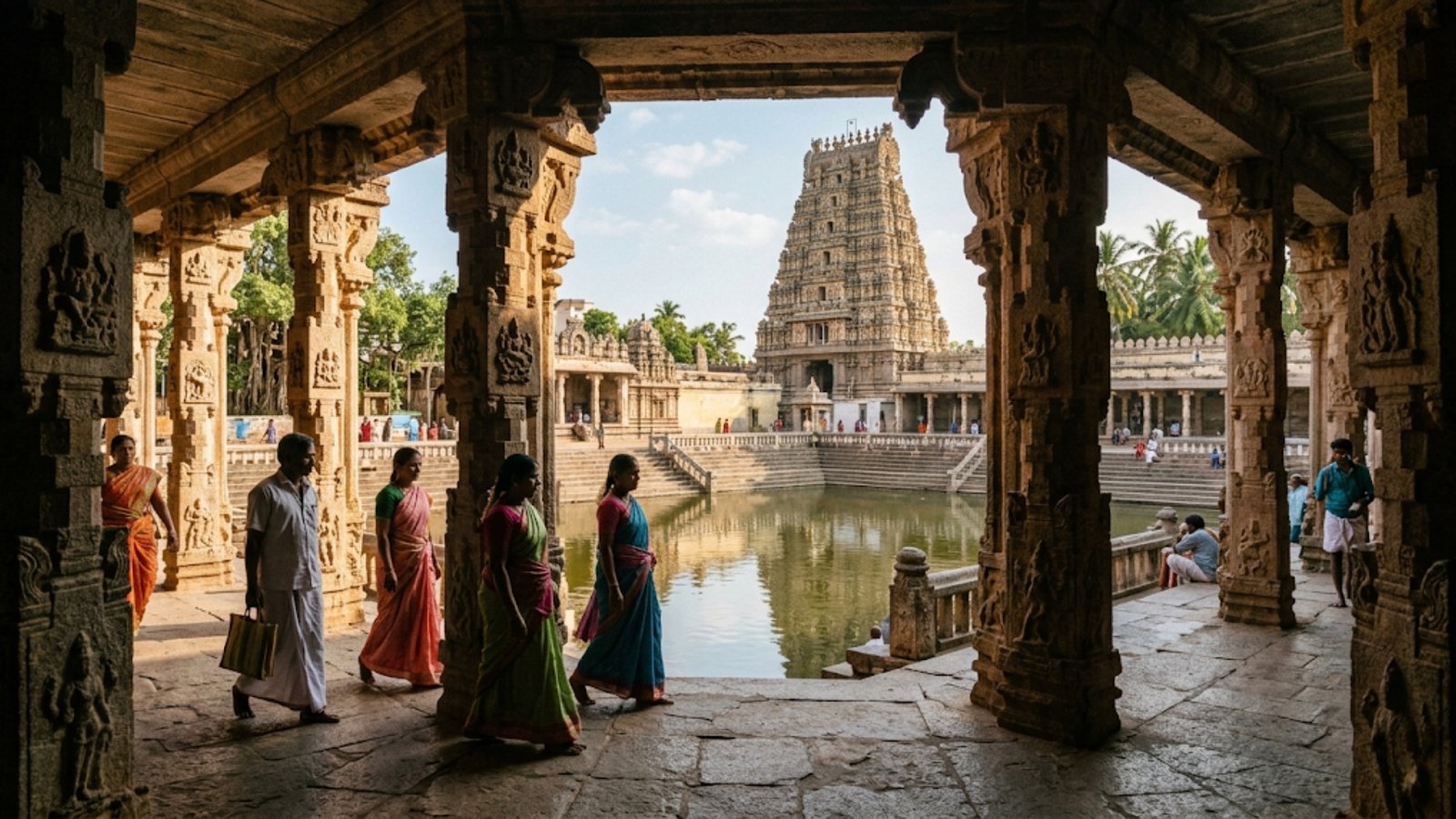
Temple tanks, ponds, stepwells, and water channels created cooler microclimates around temple complexes.
Evaporation from water surfaces naturally reduced nearby air temperatures.
Water features also improved humidity balance and enhanced airflow around the structures.
Ancient builders clearly understood the relationship between water and environmental comfort.
How Indian Temple Architecture Adapted to Different Climates
India’s varied geography forced ancient architects to develop region specific cooling techniques.
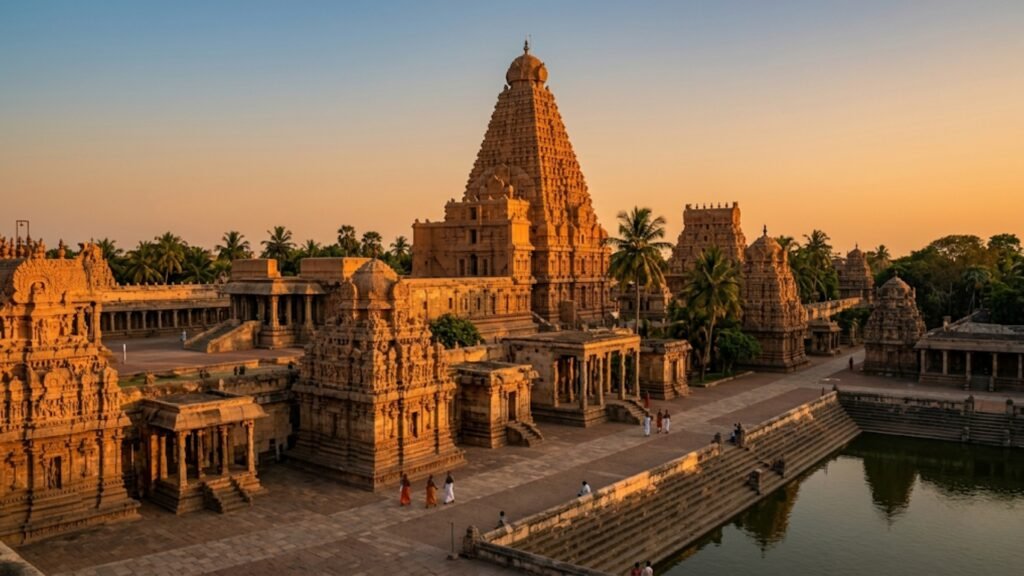
South Indian Temples Used Massive Stone Structures
Temples in Tamil Nadu and Karnataka faced intense tropical heat.
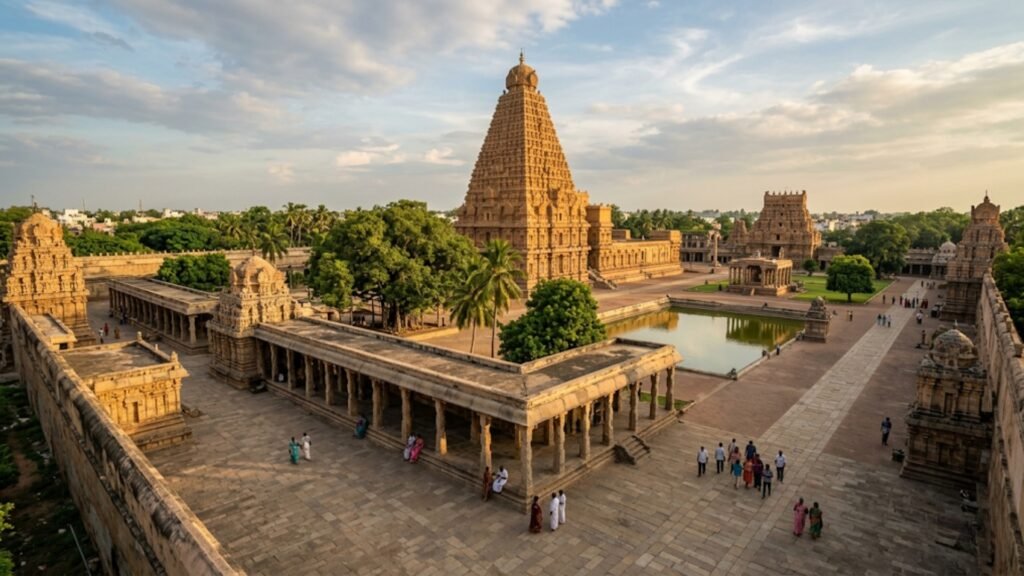
Builders responded with thick stone walls, layered corridors, shaded pathways, and large temple tanks.
The famous Brihadeeswarar Temple in Tamil Nadu remains one of the best examples of climate sensitive temple planning.
Despite centuries of exposure to heat, the inner sections of the temple remain remarkably comfortable.
Rajasthan Temples Used Desert Cooling Techniques
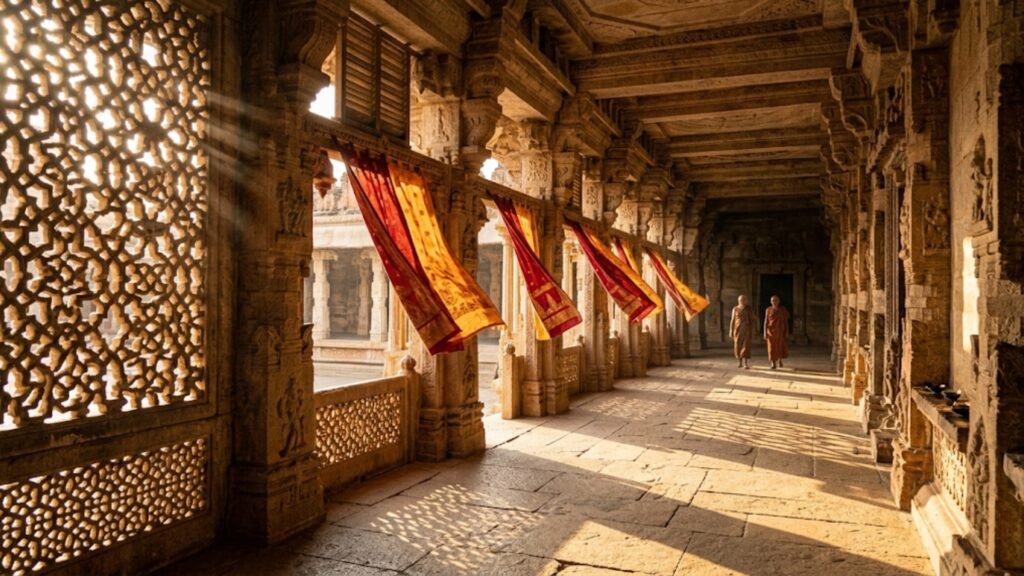
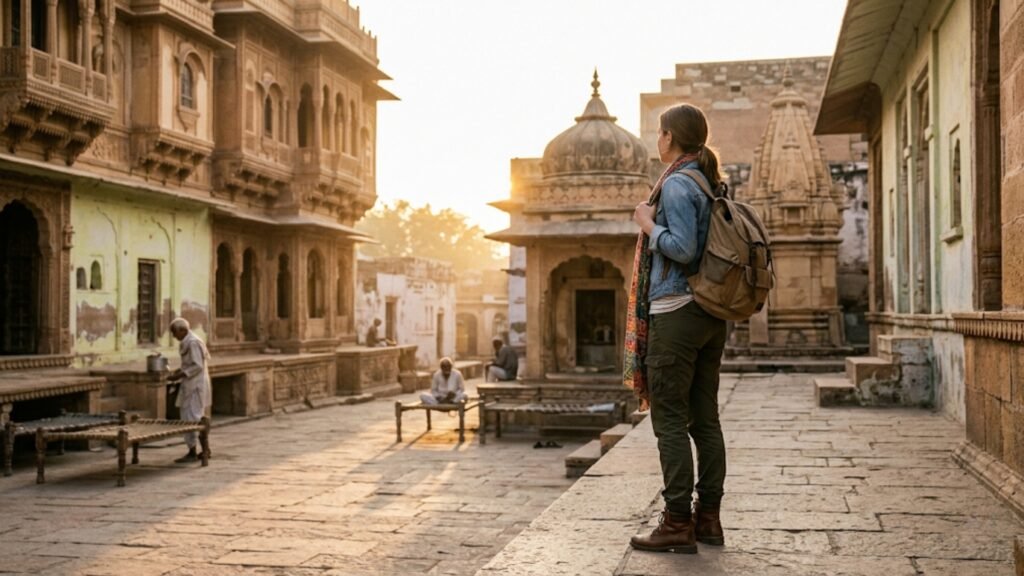
In desert regions, temples used sandstone walls, narrow passages, shaded courtyards, and carved jali screens.
These stone lattice screens filtered sunlight while allowing air circulation.
This reduced indoor heat while maintaining ventilation.
Many modern architects now study jali systems again for sustainable building design.
Himalayan Temples Balanced Warmth and Ventilation
Temples in Nepal and Himalayan regions had to adapt to both cold winters and warm summers.
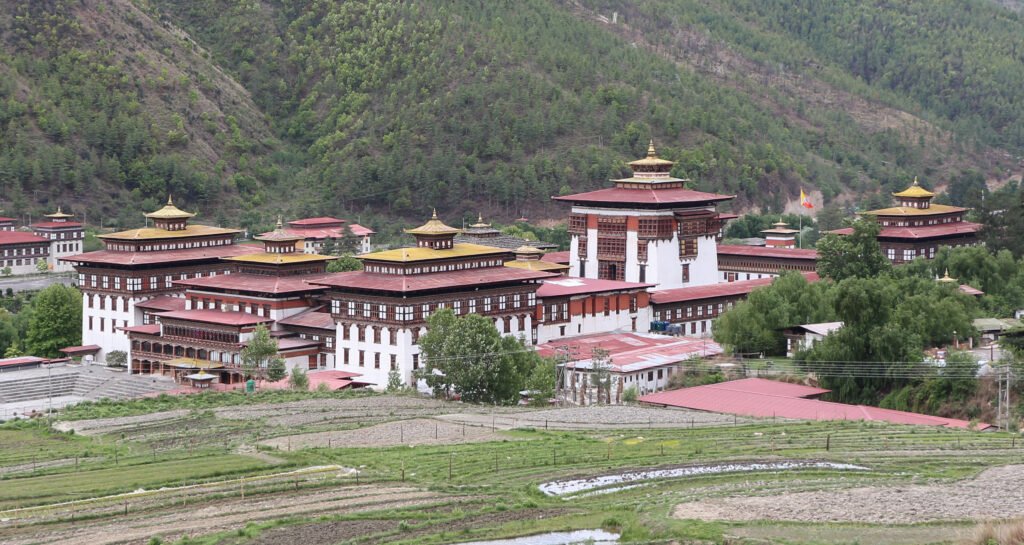
Builders combined stone, timber, layered roofs, and open courtyards to regulate temperature throughout the year.
Traditional Himalayan architecture demonstrates how ancient builders balanced insulation and airflow together.
Travelers interested in Himalayan culture and architecture can explore heritage journeys through Paroma Travels for Nepal and Bhutan experiences.
The Role of Temple Materials in Natural Cooling
The materials used in ancient temples played a huge role in environmental comfort.
Stone Worked as a Natural Thermal Regulator
Granite and sandstone respond to heat differently compared to concrete or glass.
Modern materials heat rapidly under direct sunlight. Traditional stone construction absorbs heat slowly and stabilizes temperatures naturally.
This is why many temple floors and interiors still feel cool despite high outdoor temperatures.
Lime Plaster Allowed Buildings to Breathe
Ancient builders frequently used lime plaster instead of modern cement.
Today, many sustainable architects are returning to lime based construction because of its environmental benefits.
According to the ArchDaily architecture platform, passive cooling methods and breathable materials are becoming increasingly important in sustainable urban design.
Wooden Elements Improved Seasonal Balance
In Himalayan and Nepalese temples, wooden beams and roofs helped balance insulation and ventilation.
Wood adjusted better to changing seasonal temperatures compared to rigid modern materials.
This made temple structures more adaptable to local climates.
Why Modern Cities Are Becoming Heat Traps
Modern cities suffer from what scientists call the urban heat island effect.
Concrete, asphalt, glass, and metal absorb and store heat throughout the day. Tall buildings block airflow while limited greenery reduces natural cooling.
Air conditioning systems cool interiors but release hot air outside, increasing temperatures further.
According to the United Nations Environment Programme, urban heat islands are becoming one of the biggest climate challenges for rapidly growing cities.
Ancient temple complexes avoided many of these problems because they integrated water systems, shaded spaces, vegetation, and open layouts into their design.
Ancient Temple Design vs Modern Urban Planning
The contrast between ancient temples and modern cities reveals two very different architectural philosophies.
Ancient Temple Architecture
Modern Urban Development
Built around local climate
Often built for density and speed
Used passive cooling techniques
Relies heavily on air conditioning
Included courtyards and water systems
Limited natural cooling features
Used thick natural materials
Concrete and glass trap heat
Encouraged airflow
Dense construction blocks ventilation
Worked with nature
Often works against environmental conditions
Ancient builders prioritized long term environmental balance. Modern urban planning often focuses on rapid expansion and short term efficiency.
How Temple Courtyards Created Natural Cooling Systems
Courtyards were among the most effective elements of ancient temple cooling architecture.
Shaded Walkways Reduced Heat Exposure
Surrounding corridors blocked harsh sunlight from reaching inner spaces.
This reduced heat accumulation and improved visitor comfort.
Open Centers Improved Air Circulation
The central open area allowed warm air to rise upward while cooler air moved through surrounding corridors.
This created a natural ventilation cycle.
Night Cooling Reduced Stored Heat
Temple courtyards released stored heat during nighttime hours.
As a result, structures began the next day at lower temperatures.
Modern cities rarely include enough open spaces to achieve similar cooling effects.
Stepwells and Temple Tanks Were Ancient Cooling Innovations
Stepwells and temple tanks were not only religious structures. They also functioned as climate control systems.
Evaporation from water surfaces cooled surrounding air naturally.
Stone steps around these water bodies remained cool and created comfortable gathering spaces during hot weather.
The famous Rani ki Vav in Gujarat demonstrates how ancient Indian architecture combined engineering, water conservation, and passive cooling together.
These systems were centuries ahead of their time.
What Modern Architects Are Learning From Ancient Temples
Architects worldwide are once again studying traditional architecture for sustainable solutions.
Passive Cooling Is Returning
Modern green buildings increasingly use:
Cross ventilation
Courtyard planning
Thermal mass materials
Natural shading systems
Water integrated landscapes
Climate responsive orientation
Many of these ideas closely resemble ancient temple design principles.
Travelers today increasingly value heritage tourism and environmentally conscious travel experiences.
Ancient temples provide insight into how earlier civilizations lived sustainably.
Organizations such as the UNESCO World Heritage Centre continue to highlight the importance of preserving traditional architecture and indigenous building knowledge.
Climate Responsive Design Is Essential for the Future
As global temperatures rise, sustainable construction becomes increasingly important.
Ancient temple cooling architecture proves that buildings can remain comfortable without excessive energy use.
Modern cities may not replicate temple designs completely, but they can adopt many of the same environmental principles.
Famous Temples Known for Climate Sensitive Design
Several temple complexes across South Asia showcase extraordinary environmental intelligence.
Meenakshi Amman Temple in Tamil Nadu
This temple features massive stone corridors, shaded pathways, high ceilings, and excellent ventilation systems.
The design reduces heat naturally while maintaining airflow.
Sun Temple Konark in Odisha
The temple demonstrates advanced understanding of sunlight orientation and environmental planning.
Its structural layout reflects sophisticated architectural knowledge.
Angkor Wat in Cambodia
Angkor Wat integrated reservoirs, moats, and large water systems that helped regulate temperatures across the temple complex.
It remains one of the greatest examples of climate integrated architecture in the world.
Kailasa Temple in Maharashtra
Carved directly into rock, this monolithic structure benefits from the natural insulation provided by surrounding stone.
Travelers interested in exploring India’s architectural heritage can also discover cultural experiences through Paroma Travels cultural tours.
Why Ancient Architecture Matters During the Climate Crisis
The climate crisis is forcing cities to rethink construction practices.
Modern urban environments increase temperatures, energy consumption, and environmental stress.
Ancient temples offer practical lessons that remain highly relevant today.
These structures demonstrate how buildings can:
Stay cool naturally
Reduce energy dependence
Improve airflow
Adapt to local climates
Use sustainable materials
Integrate water and greenery effectively
Traditional knowledge does not replace modern engineering, but it can improve it significantly.
Combining ancient wisdom with modern technology may help cities become more resilient in the future.
How Travelers Can Experience Climate Smart Heritage Architecture
Exploring ancient temples provides a deeper understanding of sustainable living traditions.
Visitors often notice how temple interiors feel calmer and cooler compared to crowded urban spaces.
Heritage tourism across India, Nepal, Bhutan, and Sri Lanka allows travelers to experience climate responsive architecture firsthand.
Travelers interested in architecture, spirituality, and cultural heritage can also explore destination insights through the Paroma Travels blog.
Conclusion
Ancient temple builders understood something many modern cities have forgotten.
Buildings should work with nature, not against it.
For centuries, temples across South Asia remained naturally cool through intelligent planning, thick materials, shaded spaces, airflow systems, courtyards, and water integration.
Meanwhile, many modern cities struggle with rising temperatures caused by dense concrete development and excessive energy use.
As architects search for sustainable solutions, ancient temple cooling architecture is becoming more relevant than ever.
These temples are not only spiritual and cultural landmarks. They are also remarkable examples of environmental intelligence that still offer valuable lessons for the future of urban living.